TaxDome Portal at Arman CPA
Background
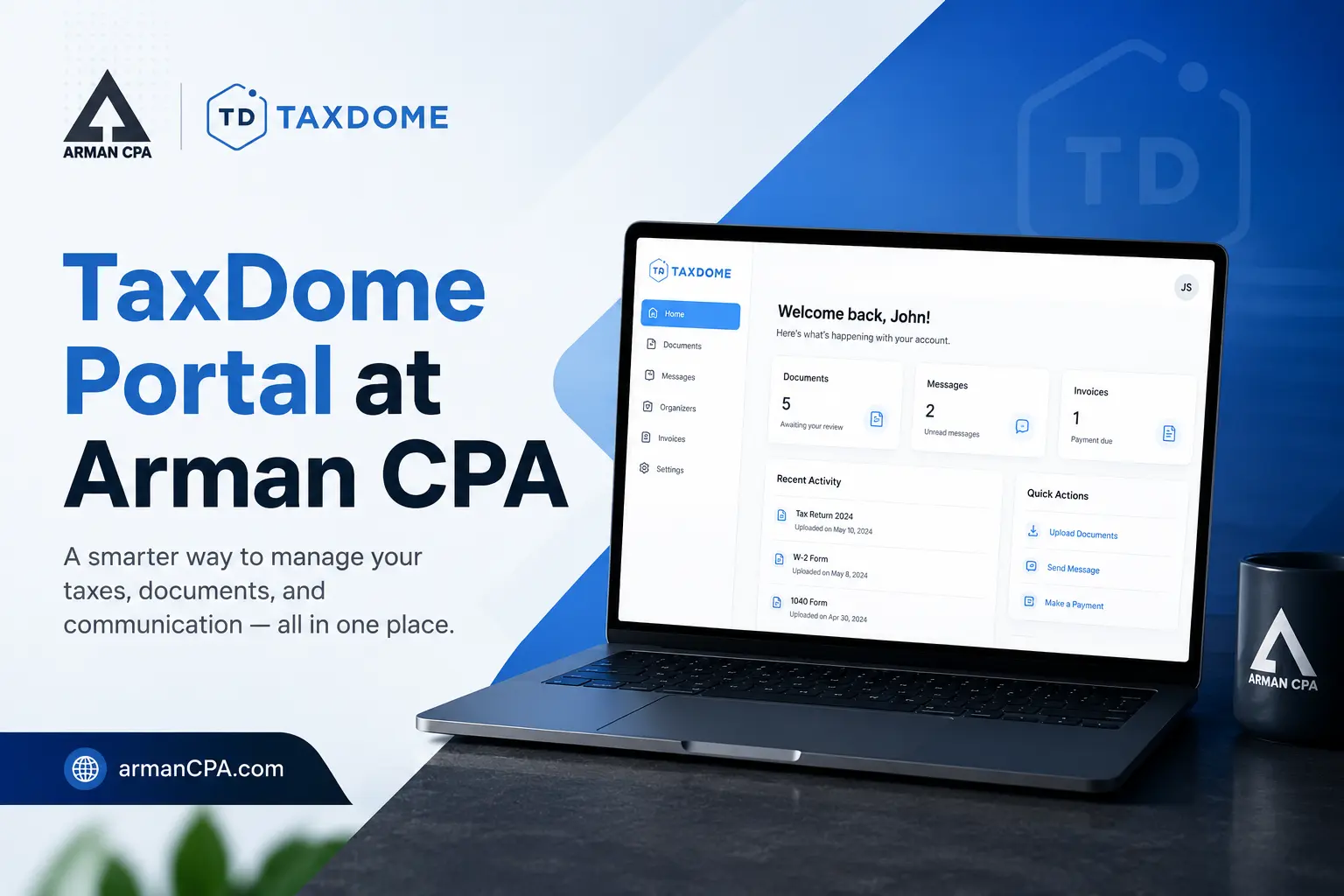
Arman Chowdhury, CPA, P.C. is a family-run practice based in Jamaica, Queens, serving over 110 businesses a month and filing more than 3,500 tax returns a year. TaxDome sits at the centre of the firm's daily operations, handling client communication, document intake, billing, and workflow across eight service lines.
As the firm began work on a wider AI implementation, the first step was not to introduce new tools. It was to understand what the firm already had. This meant a full audit of the TaxDome portal itself: how it was configured, how well it was being used, and where the gaps sat between what the platform could do and what was actually happening day to day.
What the audit covered
The audit examined the portal across three areas: workflow structure, financial operations, and account governance.
On the workflow side, the audit mapped all 14 pipelines configured in the system and ran 62 integration tests to check how well each pipeline behaved in practice, rather than only how it was designed on paper.
On the financial side, a billing analysis found that 44.6% of invoiced value was outstanding at the time of review, a figure worth investigating further to understand whether this reflects normal accounts receivable timing or a pattern that needs attention.
On governance, the audit found no two-factor authentication activity recorded across any of the firm's 11 seats (one owner, three admins, seven employees), alongside more than 999 unactivated client portal accounts. Both point to the same underlying issue: features exist in the platform but have not been switched on or adopted.
The audit also tested TaxDome's Zapier integration directly, rather than relying on documentation. It found that the integration exposes only three contact-level triggers, with no triggers available at the job, task, or pipeline level. This matters for automation planning, since it rules out several approaches that would depend on those events. Separately, TaxDome's own API entered private beta in spring 2026, which may open up options not currently available through Zapier.
What this means
None of these findings are unusual for a firm running a busy practice on a platform as capable as TaxDome. Adoption gaps like these are common, since day-to-day pressure tends to favour whatever gets the immediate job done over configuring every available feature. The value of the audit is in making the gaps visible and specific, rather than treating platform underuse as a vague sense that "we could probably be doing more."
The findings are now feeding directly into the next stage of the firm's AI implementation: employee interviews structured around the audit's specific gaps, such as whether client communication happens inside TaxDome or outside it, whether time is logged consistently, and why 2FA has not been adopted. This turns the audit from a one-off report into the starting point for a firm playbook and a prioritised automation shortlist.
Why this fits the firm's wider direction
Arman Chowdhury, CPA, P.C. is working towards a broader shift, from a compliance-only practice towards a firm that also offers AI implementation and advisory work to its own clients. The approach being taken here, auditing the firm's own systems honestly before building anything new, is the same approach the firm intends to offer commercially. Proving the method internally first, on a platform the firm already knows well, gives it a concrete example to point to rather than a general claim about what AI implementation can do.
More Articles